
Ann McCann | Issue 6, Spring 2025
Outside it’s all California sunshine, the kind that heals and grows and ripens—full, fat, juicy. The kind that makes the hairs on your arm glisten gold and sweat bead at the base of your back. I greet the sun and squint out at the backyard and into the blooming cherry trees. The trees hum with the excitement of pollinators coming alive. I greet them with a smile and run my hands over the bark of the tree—rough and alive. It’s late spring of 2020 and the world is in full-blown Pandemic Era and it seems grief and fear are the new normal.
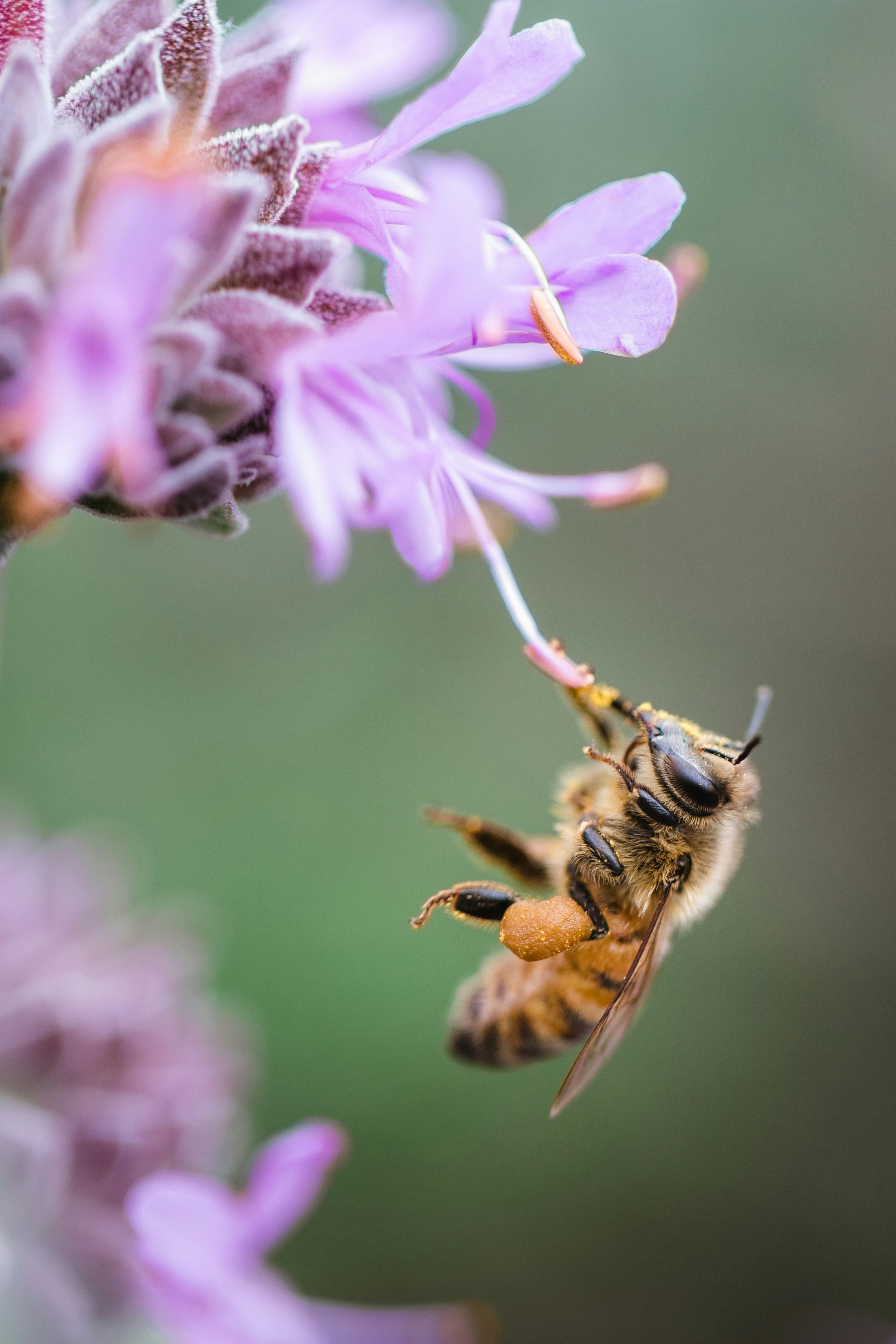
I turn on the water spigot and watch the refreshing water pool at my bare feet. I could have slipped on my garden shoes, but the idea of being barefoot in my sundress feels romantic and I yearn to connect to the earth beneath my feet. I survey my garden. Not for signs of pests or a need for pruning, but for signs of life—my favorite signs of life, my bees. They buzz and hum busily along, in and out of fat yellow zucchini flowers, drunk with pollen all over their fuzzy bodies. I count the species I can see today: non-native European honeybees, native California Carpenter bees, native yellow-faced bumble bees, and native mason bees—metallic green and blue in the sunshine. They belong in this garden more than I do and do nearly as much work keeping it alive.
I bend down and turn out a zucchini flower, careful not to crease a petal, and a honeybee stumbles off the stamen and crawls across my hand, her pollen pockets bright yellow and full. After gently bumping her from my hold back into her flower, I pull the hose over and flood the garden boxes, careful not to disturb any working insects.
These are the good times. These are not times for grief but times for salutations and
jubilations. But as much happiness as I have learned from them, my bees have taught me more about grief than anything else. They taught me that the grief always comes and you must decide what to do with it or it will consume you. Where warm mornings are alive and buzzing, cool evenings (as well as the climate crisis and pesticide use) bring with it dying bees. Whether sick, cold, or old, dying bees have always had a way of finding me. Where many find fear, I have always found fondness with bees. Upon finding one struggling, I try nursing them back to health, cradling them in warm hands, feeding them in gas station soda lids in my bedroom, watching them fade in front of my eyes. Their crawl gets slower, their proboscis no longer laps up sugar water, and their tiny tarsal claws have a hard time clinging to my skin.
The first summer of the Pandemic, I felt like more bees were coming to me dying than alive, a symbolic parallel that I’m sure many who remember that time understand. I sobbed through each patient as they faded away and died over the course of our evening together. Over and over again, grief and loss, death and its reckoning. In the middle of the Pandemic, this has become a virtue to understand: death will come, will you be ready? I found that the answer was always, no. I will not be ready, you will not be ready, no one will be ready when death knocks near them and we must learn to say goodbye. I suspect I am wary of those who carry grief like a synecdoche, the moment of loss encompassing the whole experience. Grief goes far and beyond that moment and watching over my bees taught me that mourning begins when you first imagine the goodbye. I will update you when I have found the moment that grief ends.
About my new position as death matron to bees, my father said to me, “How lucky you are, to have found your life’s purpose. Most people never learn what theirs is.” Honeybees bring their sick and dying out of the hive to keep it healthy, and while I understand this ritual, I cannot say it bodes well with reckoning with grief. And so there I would be, the last soul to interact with them. I would photograph each species of bee intently and then place them in a curio box of other insects that crossed over under my watch and care. Several times, to be the most humane caretaker I could be, I had to euthanize the bees in my freezer. It only takes about 12-15 seconds—as anyone who has let anything loved go, those seconds both speed up and drag on for eternities—but as I clutched the freezer handle in sorrow, I would slide down to the floor, sobbing, until I gained the courage to open the door once again. Each bee I said goodbye to was cried over. Call it a bleeding heart, call me a liberal hippy, but to me, this death rite showed me that each soul was important and served a purpose on this planet until the very last moment it was here, and, to flirt with cliche, it shows that we all do.
Ann McCann
Ann McCann (she/her) is a sapphic poet and essayist, chronicling California in the tradition of Didion.


Leave a Reply